Heat from workings in post-mining areas
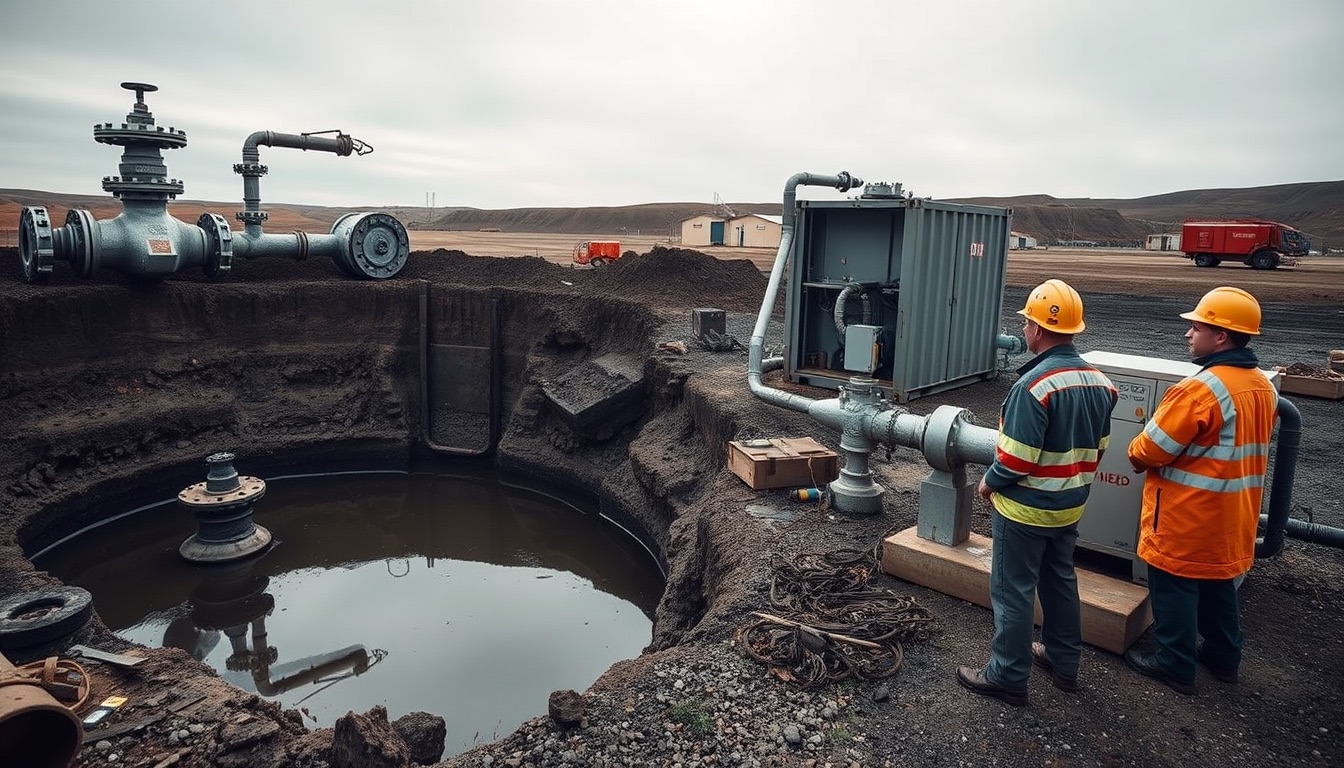
Water collecting in active and closed mine workings could serve as a heat source for district heating. In mining regions the infrastructure giving access to underground resources already exists, but putting it to use requires installations, spending and changes in the law.
Mine water is groundwater and rainwater that flows into underground workings and is then pumped out. Depending on geological conditions it may reach a temperature that allows it to be used as a ground source for heat pumps.
Infrastructure that is already there
In mining areas the underground contains a network of workings, shafts and boreholes created through mining activity - this is what municipalities point to as a possible basis for capturing heat.
The potential of mine water was discussed by Michal Urgol, mayor of Jastrzebie-Zdroj and chairman of the Association of Mining Municipalities. In his view, both the water in the workings and the heat stored in the rock could be energy sources, and the workings could act as a kind of natural heat reservoir. Once heat exchangers are installed, heat from the water or rock could be used in heating installations. Where the water is too cool, heat pumps would be needed, which means extra investment and adapting the installation to conditions in a given working.
Regulations are the obstacle
One of the main barriers named by local officials is the rules governing the assets of mines being closed. As the mayor of Jastrzebie-Zdroj stresses, the act does not allow the Mine Restructuring Company to invest in projects of this kind or to hand underground workings over to municipalities. That means that even when a given working has energy potential, a municipality cannot simply take it over and use it to build a heating installation.
Experts suggest the answer could be to allow investment in such projects, or to make the infrastructure available to municipalities and investors.
Water that has to be drained anyway
Using mine water as a heat source matters beyond energy. The water must be monitored and discharged regardless, and limiting mine dewatering can raise water levels and flood land. In mining municipalities, new water bodies appearing where extraction has caused ground subsidence are also a problem.
In Jastrzebie-Zdroj some of that land has been put to recreational use - one of the water bodies formed by subsidence now serves tourism. Kayaking is organised at the Szymancowka harbour, and a campsite is planned.
Recovering heat from mine water is one option for developing local heat sources in post-mining areas. Poland's experience is mainly with thermal waters, while mining regions can draw on existing workings and the water they hold.