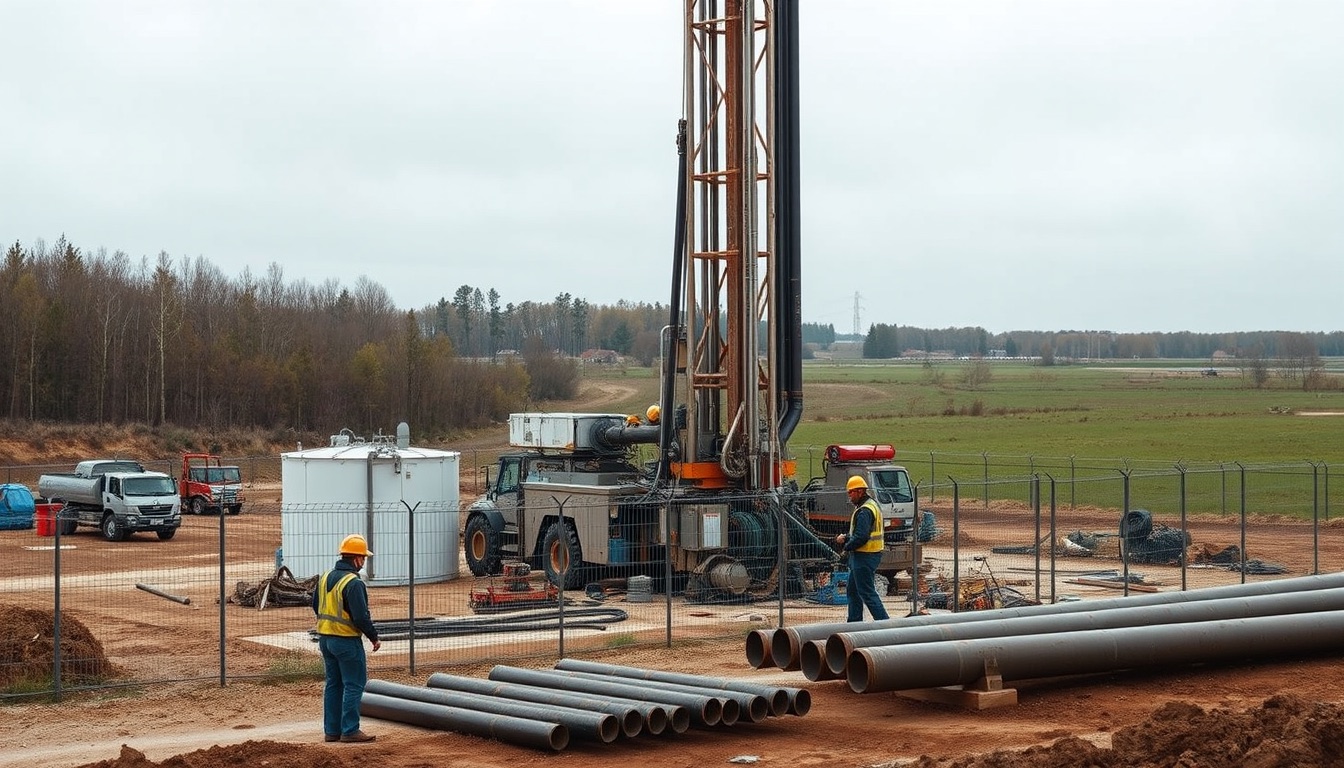
For several years Krakow has been preparing the GT-1 exploration well at Przylasek Rusiecki. The borehole was to establish whether thermal waters in this part of Nowa Huta are suitable for heating buildings and for the construction of thermal pools. Drilling was planned for 2026, but the schedule has changed.
Gas pipeline on the drilling plot
The change was announced by Renata Krezel, press officer of the municipal heating company MPEC. She explained that the cause is the construction of a DN 700 high-pressure gas pipeline on the Wezerow-Przewoz route, whose path crosses the plot designated for the investment. That made it necessary to update the design documentation, including the Geological Works Project.
According to the daily Dziennik Polski, the borehole can be drilled no earlier than 2027. By then the city has to complete the design work, prepare the tender and fit the technical assumptions to the pipeline route. MPEC said the tender documentation needed to choose the drilling contractor is only now being drawn up.
Scope and cost
The well is to reach about 1820 metres. At that depth specialists expect water at roughly 55 degrees Celsius. Hydrogeological, geophysical and laboratory tests are to last about 12 months, and their outcome will decide the future of the project.
Krakow received more than PLN 12 million from NFOŚiGW, the National Fund for Environmental Protection and Water Management, for the recognition of thermal water resources. The money is to pay for assessing the resource and its usefulness for district heating and balneology. The beneficiary is the municipality of Krakow, and the work is handled by the Municipal Investment Board. The whole task is expected to cost PLN 15.2 million, and the city's share covers only the value added tax.
What happens to the heat
Should the well confirm access to hot water, MPEC will be able to supply it to nearby facilities. Among the potential heat consumers are the Przylasek Rusiecki recreation centre and the "Branice" Science and Technology Park. For the project as a whole, the geothermal potential is put at about 60 MW. Thermal waters could also allow geothermal pools to be built, similar to those known from the Podhale region.